ADUs in Virginia
ADUs have been given the green light statewide in Virginia!
A rundown of what that means...
On April 13, 2026, Governor Spanberger signed into law a bill which requires that all municipalities in Virginia allow Accessory Dwelling Units (ADUs) to be permitted by-right in all single-family residential zoning districts.
The full text of the bill is here. It's short, but we'll summarize the bill's text and requirements below.
Ok, great! But what is an ADU?
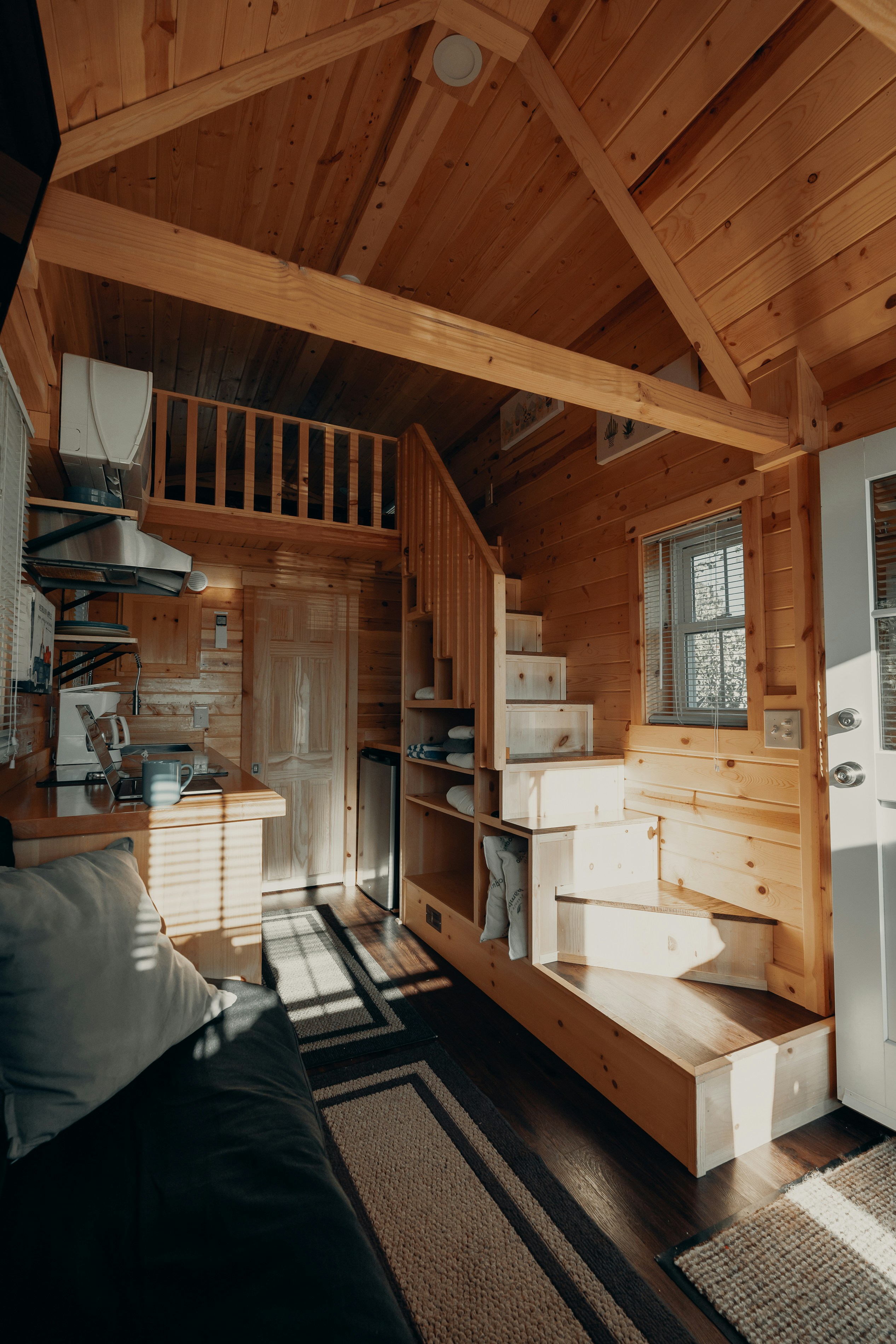
An Accessory Dwelling Unit (ADU) is a second, usually much smaller home that's built on the same lot / parcel as the primary residence of a single-family lot.
ADUs have been around for a very, very long time. In 19th century American cities, they were commonly known as carriage houses, servant quarters and "mother-in-law suites". More recently they have been used to house extended family members, nannies & au pairs, and students.
ADUs began to be pushed out of the mainstream due to zoning regulation in the early 20th century, and by about the 60s, most municipalities had outlawed them.
But as the housing affordability crisis has worsened, there has been a growing demand for ADUs. Within the last 10 years, cities on the west coast began passing ADU friendly laws, and that has begun a resurgence in legislation to make ADUs available and easy to build.
All kinds for all kinds.
ADUs provide greater flexibility for families who need or want to create multigenerational housing arrangements. Recently we’ve seen a dramatic increase in the number of adult children moving back in with their parents because soaring housing prices keep them from buying or renting their own homes; an ADU can provide a comfortable residence while they save up for that possibility. On the other end of life, an ADU can provide a means for parents to age-in-place with friends and family nearby, rather than moving into a costly assisted living facility or nursing home, far from the people most important to them. Having older relatives nearby benefits growing children and their parents as well.
An often overlooked but important benefit is that ADUs are a far more sustainable housing type to build than even the greenest new development. They don’t require new land or new infrastructure, so the environmental costs of developing them are minimal compared with new development. They don’t contribute to sprawl, don’t require forest removal or paving over farmland. On top of that, their small size uses less building material, and their operation requires less energy than a typical single-family home. So, incorporating ADUs into our housing options can reduce our carbon footprint.
ADUs increase the supply and variety of housing options in a high-demand area. Unlike monolithic apartment complexes, ADUs tend to diversify the population by providing access to housing for a broad range of ages and income levels. They allow residents to live closer to where they work and/or relax, which can reduce traffic congestion, and promote walkable neighborhoods, all of which have a wide range of health and environmental benefits. That combination of diversity, walkability and proximity tends to strengthen community engagement and so can help municipalities retain their unique character.
By embracing ADUs as a tool for addressing housing challenges, we can help to create a more sustainable, livable, and equitable community. I look forward to that.
What does the bill say?
The bill does allow municipalities some flexibility in determining particular rules surrounding ADUs, but it imposes limitations to prohibit localities from legislating ADUs totally out of existence.
ADUs are by-right.
The bill establishes that any single-family zoning ordinance allow ADUs by-right, that is, a property owner won't need to get any special use permit or conditional use permit, but will instead obtain an "ADU Permit", which the bill limits the price of to $500. Note that this ADU Permit fee will be in addition to any inspection or building permit fees.
What can localities require?
Localities may impose a minimum 30 day or longer lease term; to restrict ADUs becoming used as short term rentals (like Air BnB).
Localities may require the replacement of the primary dwelling's required parking if the ADU eliminates that parking and they may require dedicated parking for the ADU.
Localities may limit the floor area of an ADU to 350 square feet on lots smaller than 2,500 square feet and 500 square feet on lots greater than 2,500 square feet.
Localities may require compliance with the building code, health, emergency access, stormwater, and historic and architectural districts and other restrictions.
Localities may require owner occupancy of the ADU or the primary dwelling, but only at the time of application.
Localities can require that ADUs are less than 500 feet from the primary dwelling, they may prohibit ADUs on properties that already have more than one dwelling unit and they may prohibit ADUs from being sold separately or subdivided from the primary dwelling.
That's a lot, what can't localities require?
The zoning ordinance that a locality develops cannot require side or rear setbacks that are more restrictive than those required for the primary dwelling.
They cannot impose restrictions on height, setbacks, lot coverage or building frontage that are more restrictive than those for single-family dwellings.
Localities may not impose restrictive covenants concerning ADUs, they cannot require improvements to public streets and they cannot require affinity between occupants of the ADU and primary dwelling.
The bottom line.
ADUs can be a significant benefit to our housing supply. We think they are a wonderful tool for the folks looking to build multigenerational housing solutions. And it's not just us who think so: Habitat for Humanity did a study that shows that ADUs can provide stable housing for people on fixed or limited incomes, thereby reducing displacement risks, see here.
If you want an ADU, get in touch with us <3!