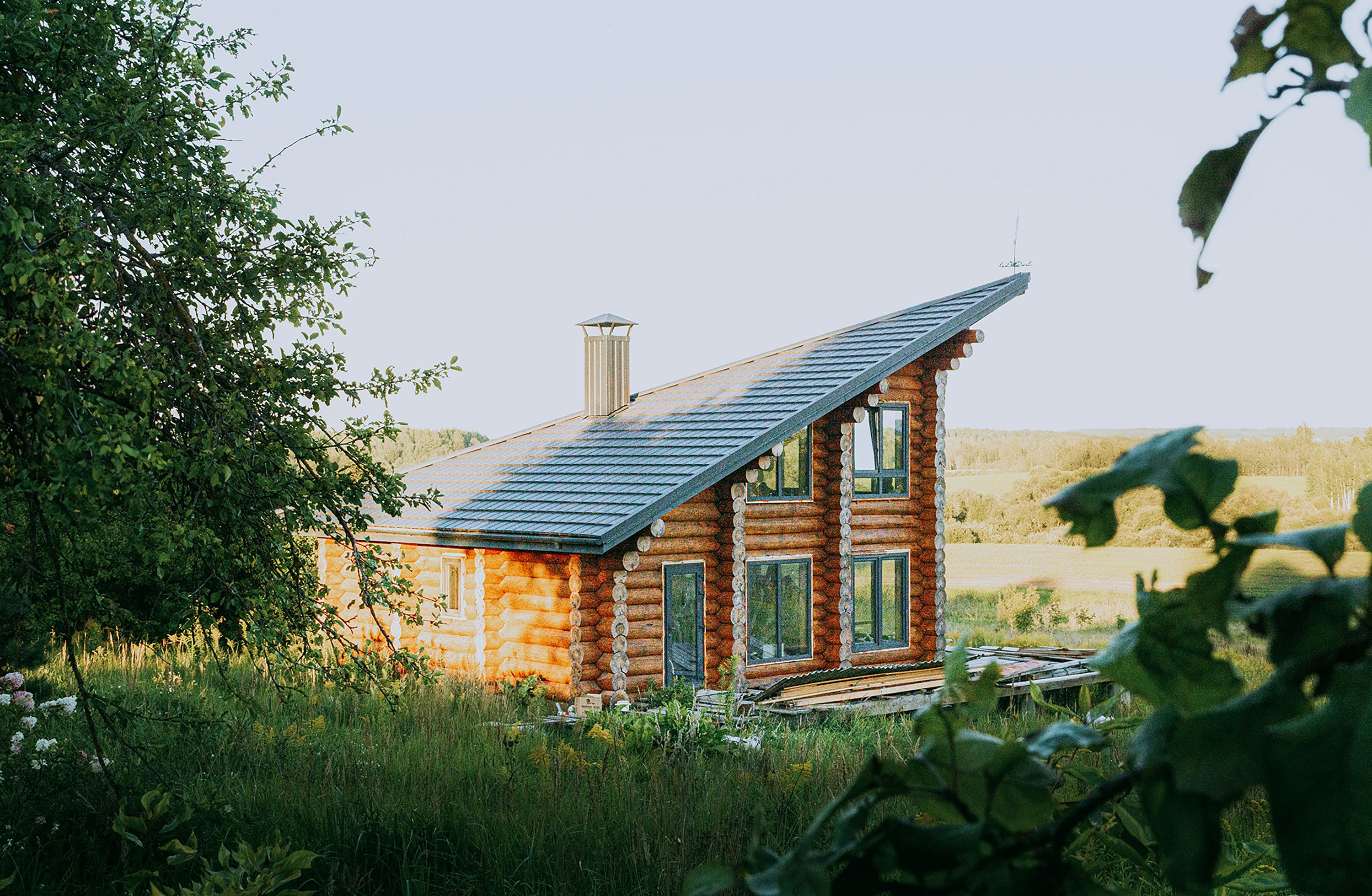
Best Practices for Passive Solar Design in Northern Virginia
The term Passive Solar Design refers to a series of design strategies that can dramatically increase the energy efficiency of a home with almost zero extra upfront construction costs. It does this by optimizing the solar gain that a building receives throughout the year: Maximizing it in the winter & minimizing it in the summer to reduce heating and cooling bills in all seasons.
If also coupled with increased insulation, and airtight detailing without thermal bridges, we have a home that can survive a power outage without much inconvenience or discomfort for the owner. If one then purchases energy efficient appliances and installs a solar array with battery backup, we have a house that isn't reliant upon the power grid; the ultimate in sustainability - net-zero or even net positive. Those two latter steps do add to the upfront costs of building a home, and we'll discuss them further in future articles, but for now let's talk about the state of the art of Passive Solar Design in Northern Virginia.
Since the 1970's, a number of entities and agencies have been putting together knowledge and data on best practices for passive solar design throughout the US. This brief article is an overview of the steps we take when we approach a passive solar design in Northern Virginia.
Location Location Location
In order to be suitable for passive solar, the building's site needs to allow the building to be elongated east to west and expose the southern facade to direct solar gain. The perfect site would have trees to the north and just outside of 45 degrees on the east and west, leaving a nice big path for the sun to the south. It's OK to have deciduous trees to the south of the building that will help to shade the house in the summer, but let light get to the building in the winter, but they will need to be close enough to the house to be effective, which can cause a different set of problems.
Quite a few architects & builders recommend that the house be oriented about 15 degrees north of east to allow more solar gain in the morning and less in the afternoon. This is a very good rule of thumb for climates whose annual temperature swings are greater than we have here in Virginia, but it isn't quite as crucial here in NoVA.
A Thermal Battery
Virginia has what we call a mixed-humid climate. It's hot in the summer, it's cold in the winter and dealing with moisture infiltration is a year-round challenge. In this climate, in order to achieve the most benefit from solar glazing we need to incorporate thermal mass.
For this type of system we'll want to design the south-facing glazing to be between 7 - 12% of the total floor area of the house. That solar glazing needs to store its solar gain in some sort of battery that gets charged by the sun during the day and releases heat during the night.
Our favorite way of doing this is to let the sunlight fall onto a well-insulated raised concrete slab. By insulating the stem walls, under the footing and a minimum four foot perimeter under the slab, we can greatly improve the thermal comfort of the house. Because it's insulated, that mass will hold heat in the winter and bleed it off in the summer.
Shade in the Summer, Sunny in the Winter
While there are a number of ways of providing shade in the summer and letting the sun in in the winter, by far our favorite is designing roof overhangs that correlate to the head and sill heights of the home's windows. We want to completely shade windows for 1 month in summer and completely expose them for 1 month in winter.
In Fredericksburg, Virginia, the sun angles end up being about 72° in the summer and 32° in the winter. Coupled with this, we need to specify Low-emissivity (Low-E) windows all around. We need to specify double- or triple-glazed low-e coatings for our south-facing windows, high R-value windows on north, west and east-facing windows.
Other "Easy" Solutions
Before we begin to discuss those elements that will add additional upfront costs to the project, there are a handful of other 'easy' things that we can do to maximize the efficiency of our passive solar design:
We can design to reduce air infiltration through the building envelope and trust that our contractor is careful, deliberate and sensitive to the difference a properly enclosed building envelope makes to the long-term thermal comfort and performance of a home.
We carefully consider glazing on the building's non-south walls, both in terms of how they will affect the buildings heat gain & loss, but also how they can effect the air distribution in the building. Which segues nicely into the need to design the arrangement of the house's rooms in a manner creates an effective air distribution scheme, both for heating in the winter and cooling in the summer.
Tying the Whole Room Together
In order for this to work to maximum efficiency, we'll need to add more insulation than the minimum required by code, however it's really not all that much more than what's required by Virginia's current Energy Conservation Code. Believe us that insulating the four feet under the perimeter of the building slab makes an immediately apparent difference in thermal comfort for the occupants compared with a raised slab that only has exterior insulation on the stem walls. You can literally feel the difference in your feet on the coldest of winter days.
Buying the most energy efficient appliances and HVAC equipment pays back in iterative ways: You see, once we've designed a good passive solar system with an insulated thermal mass for winter heating, smart ventilation for summer cooling and a layout that helps with air distribution, we've already done 30 - 70% of the work of a typical residential HVAC system, so once we correctly size the HVAC system (30% - 70% smaller, based upon the home's energy modeling) we save even more energy compared with a typical system. There are still a few more steps we need to take if the goal is to achieve net-zero, but if we've done our best up to this point we could be well past halfway there.
If we've designed a home that uses 50% of the electricity of a standard house, then designing a solar array that creates 100% of that home's electricity would be 50% the size of a typical home's array. This is what we meant by paying back iteratively: The more efficient the home to begin with, the smaller the HVAC system, the fewer electrical panels, the smaller the solar battery backup required, etc. The systems can all help each other towards the same goal.
Going Further
We can take these ideas further, for instance, by using underslab heating and cooling using PEX tubing in combination with solar hot water heating in the winter and cistern water for cooling in the summer. In either case, the water can be conveyed by using a 12v submersible pump tied to a dedicated solar panel and battery backup system. One would just need a manifold to switch it from a connection to the house's water heating or (pre-treated) cold water system.
If you're interested in having ACVN design a passive solar house for you, get in touch with us!